projects / robot-ate-my-homework
> --status=ongoing --homework=partially_eaten
The Robot Ate My Homework
A research stream on design automation, generative AI and the future of creative work, which began with a 2020 conference paper and now includes three book chapters in press.
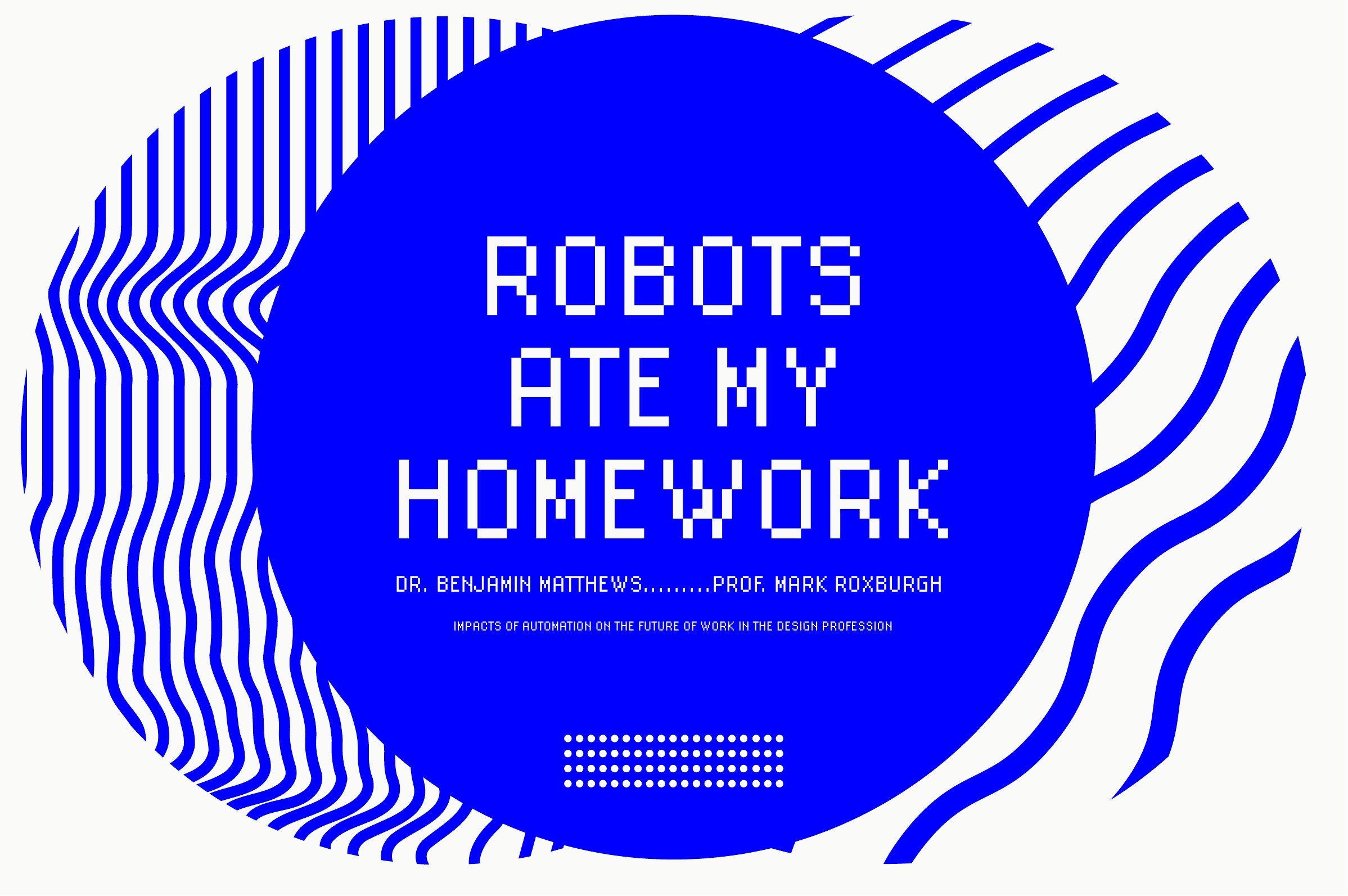
The Robot Ate My Homework began in 2020 with a blunt question that my colleague Professor Mark Roxburgh and I put to a Design Research Society audience, asking whether visual communication designers would be replaced by machines.
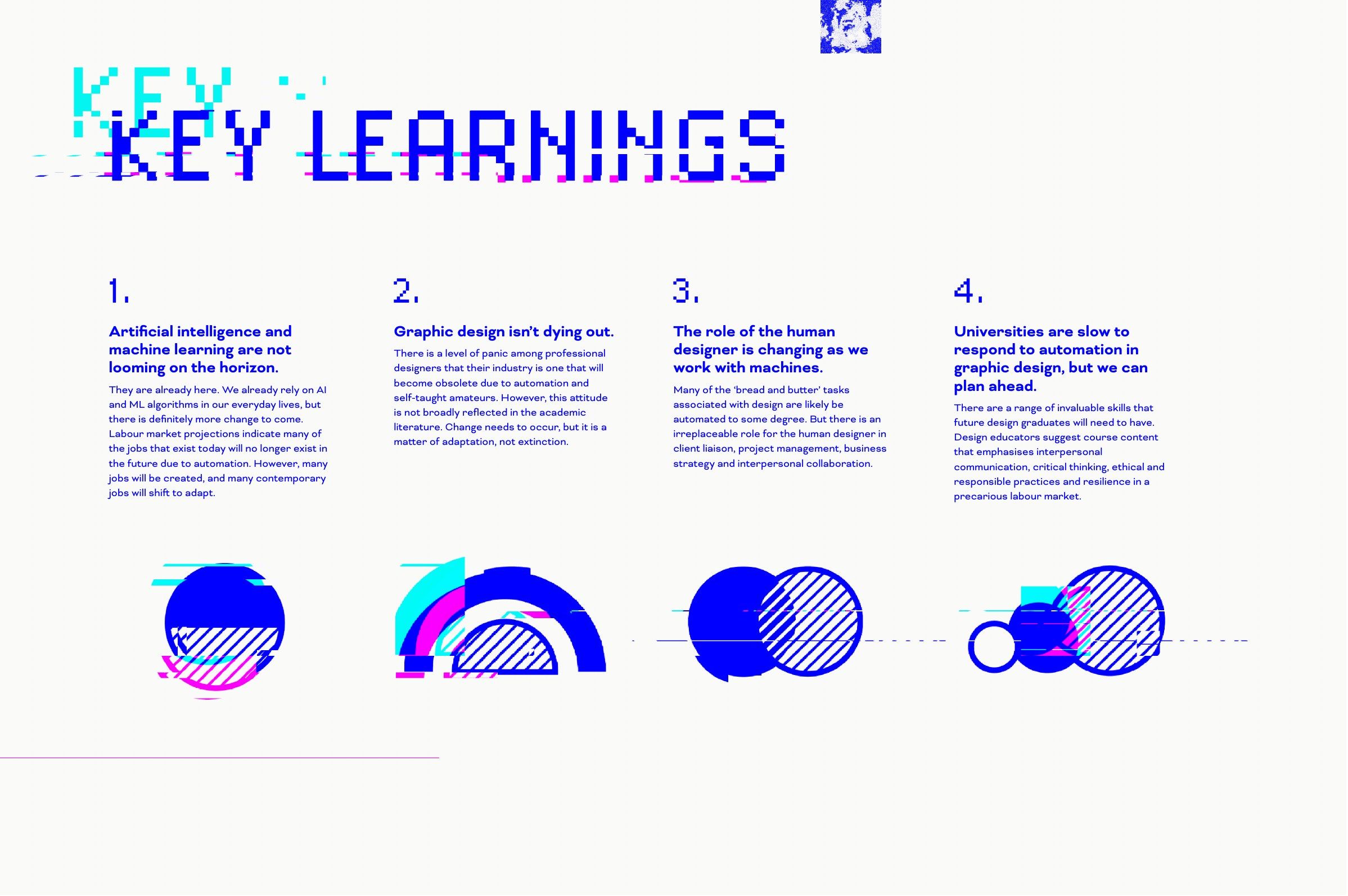
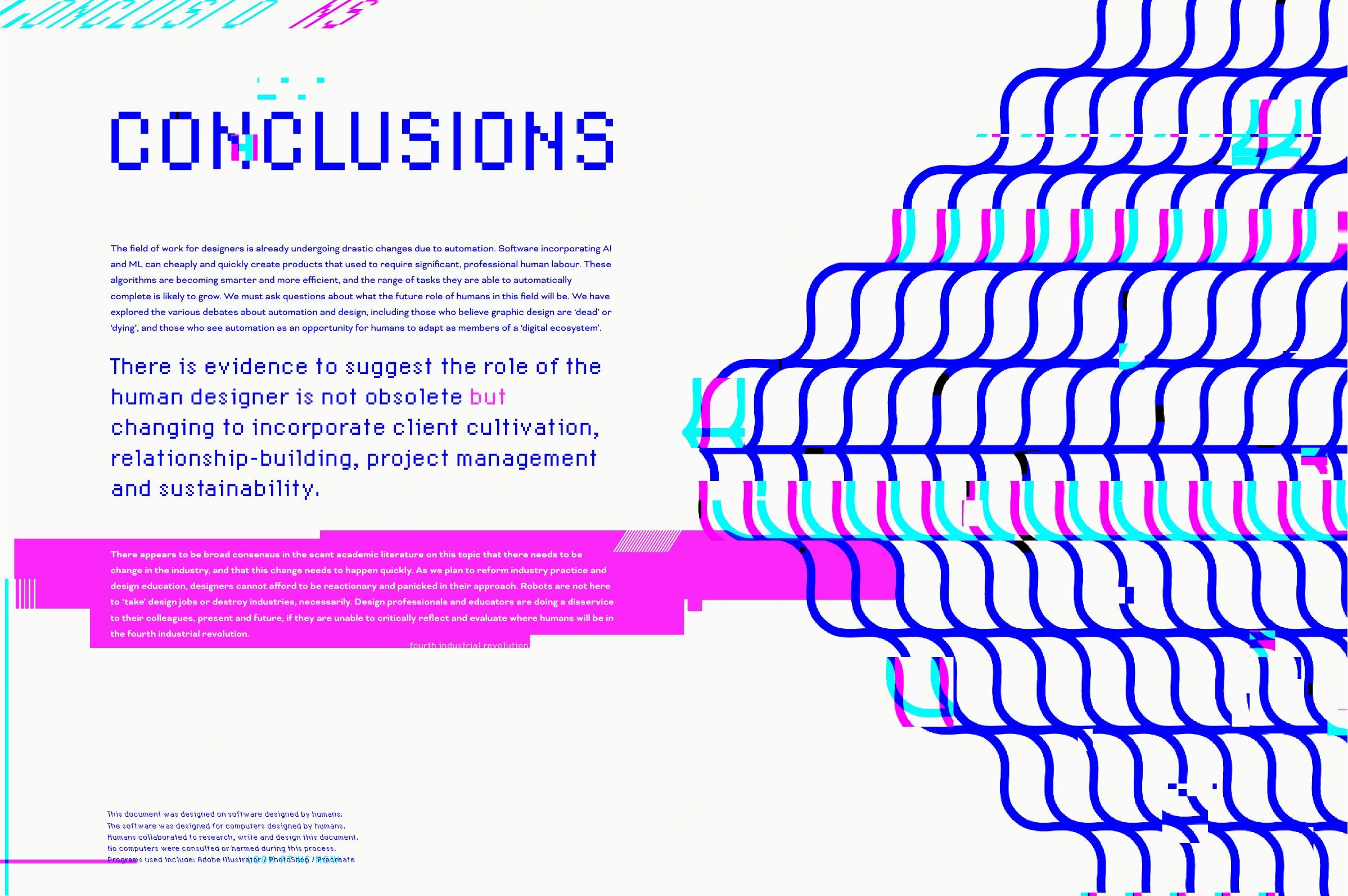
Our report, Robots Ate My Homework, set out four key learnings for industry and educators. AI and machine learning are already here rather than on the horizon, graphic design isn’t dying out, the designer’s role is changing as we work with machines, and universities can plan ahead even though they have been slow to respond. Its conclusion is that the human designer is not obsolete but is moving towards client cultivation, relationship-building, project management and sustainability.
Our 2023 literature review, Destroy All Humans, traced how automation was already reshaping graphic design and argued that design education should invest in the things people do that machines do badly, such as judgement, negotiation, facilitation and creativity in context. Since then the work has followed generative AI into design education and art. One chapter asks how design literacy should change now that students arrive already prompting. Another reads prompting through the lens of care and asks what it does to human authorship. A third, Render Ghosts, looks at authorship in AI art through the idea of blur.
Short accounts of each publication are on the AI and creative work page.
How this connects
Research on what automation and generative AI change in design work and design education.
Outcomes
- Report: Robots Ate My Homework, Impacts of automation on the future of work in the design profession
- Will visual communication designers be replaced by machines? Design Research Society Conference (2020)
- Destroy All Humans, International Journal of Art & Design Education (2023)
- Chapters in press with Bloomsbury, Routledge and Open Book Publishers
- The dematerialisation of the designer, Digital Futures Symposium, University of Newcastle (2026)
Gallery
Related publications
Matthews, B. J., & Roxburgh, M. (forthcoming, 2027). Prompting as practice: Rethinking design literacy in the AI era. In I. Bo-Linn & J. Marble (Eds.), AI for designers: Supporting creativity in graphic design education. Bloomsbury Academic.
Matthews, B., & Roxburgh, M. (in press). We become the second: Prompting, care, and the lessening of the human. In M. Zournazi, C. Hight, & J. Drummond (Eds.), Cultural analytics, AI and the digital futures. Routledge.
Matthews, B. (in press). Render ghosts: Generative AI and blur. In H. Cohen et al. (Eds.), The artist and the algorithm. Open Book Publishers.
Matthews, B., & Roxburgh, M. (2021). Robots ate my homework: Impacts of automation on the future of work in the design profession [Report]. University of Newcastle.
Cloke, S., Roxburgh, M., & Matthews, B. (2023). Who gets to wear the black turtleneck? Questioning the profession of design thinking. In K. Straker & C. Wrigley (Eds.), Research handbook on design thinking (pp. 46–70). Edward Elgar.
Matthews, B., Shannon, B., & Roxburgh, M. (2023). Destroy all humans: The dematerialisation of the designer in an age of automation and its impact on graphic design—A literature review. International Journal of Art & Design Education.
Matthews, B., & Roxburgh, M. (2020). Will visual communication designers be replaced by machines? Design Research Society Conference 2020.
Nearby in orbit
> --status=exhibiting
Photographs and words, with Katherine Williams
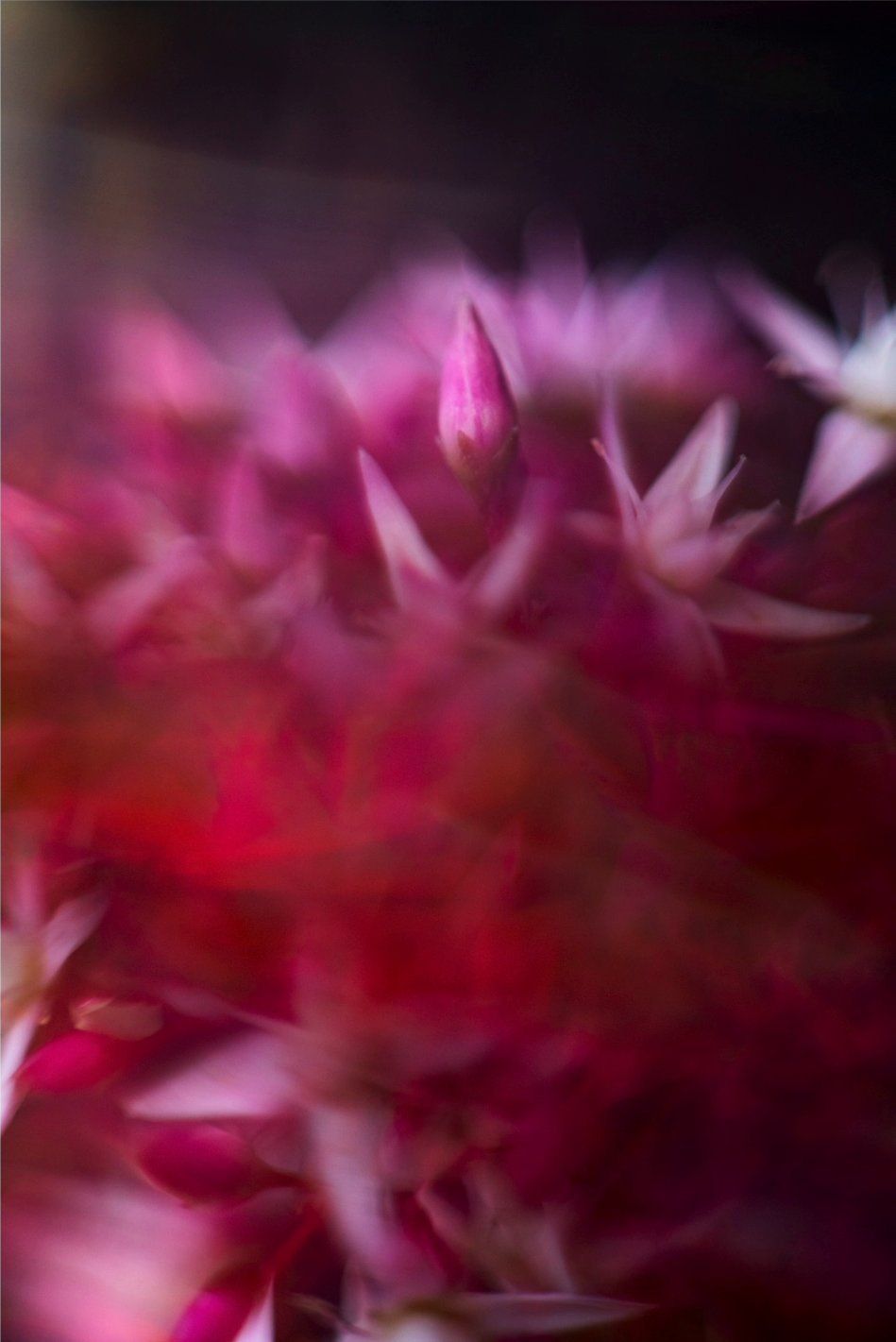
An ongoing collaboration that pairs Katherine Williams's extreme macro photography with my writing, including a Lake Art Prize finalist, the exhibitions Unfurl and HOME, and the photo essay Untamed by Rules.
Photography and writing that take up the questions about images in my research.
> --status=fermenting
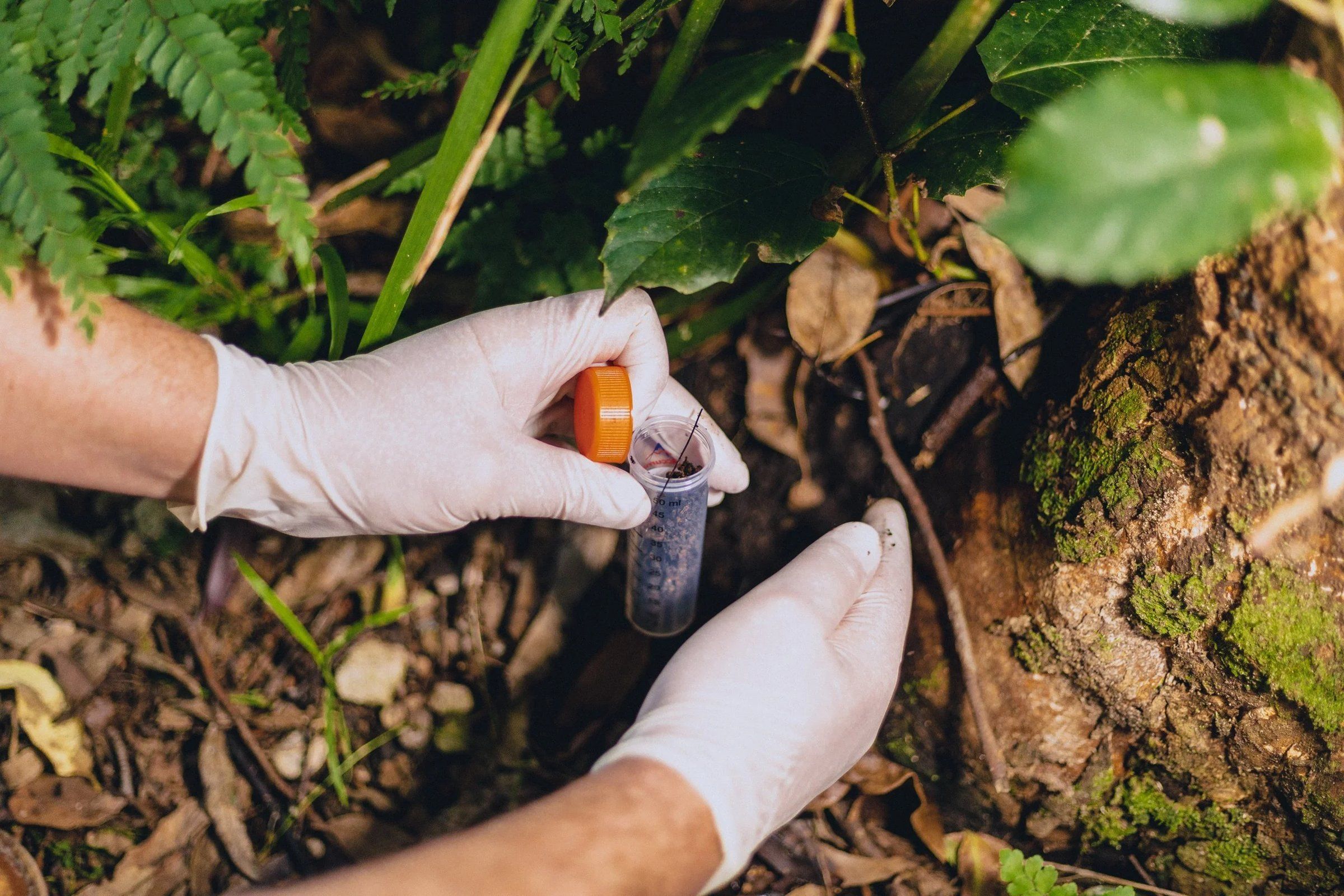
Wild Yeast Zoo
A synthetic biology spin-out building a Nagoya Protocol-aligned library of wild Australian yeasts and bacteria, collected with the public through citizen science.
Something wild gets collected, given the right conditions and turned into something useful.
> --status=writing-up --reviewer2=pending
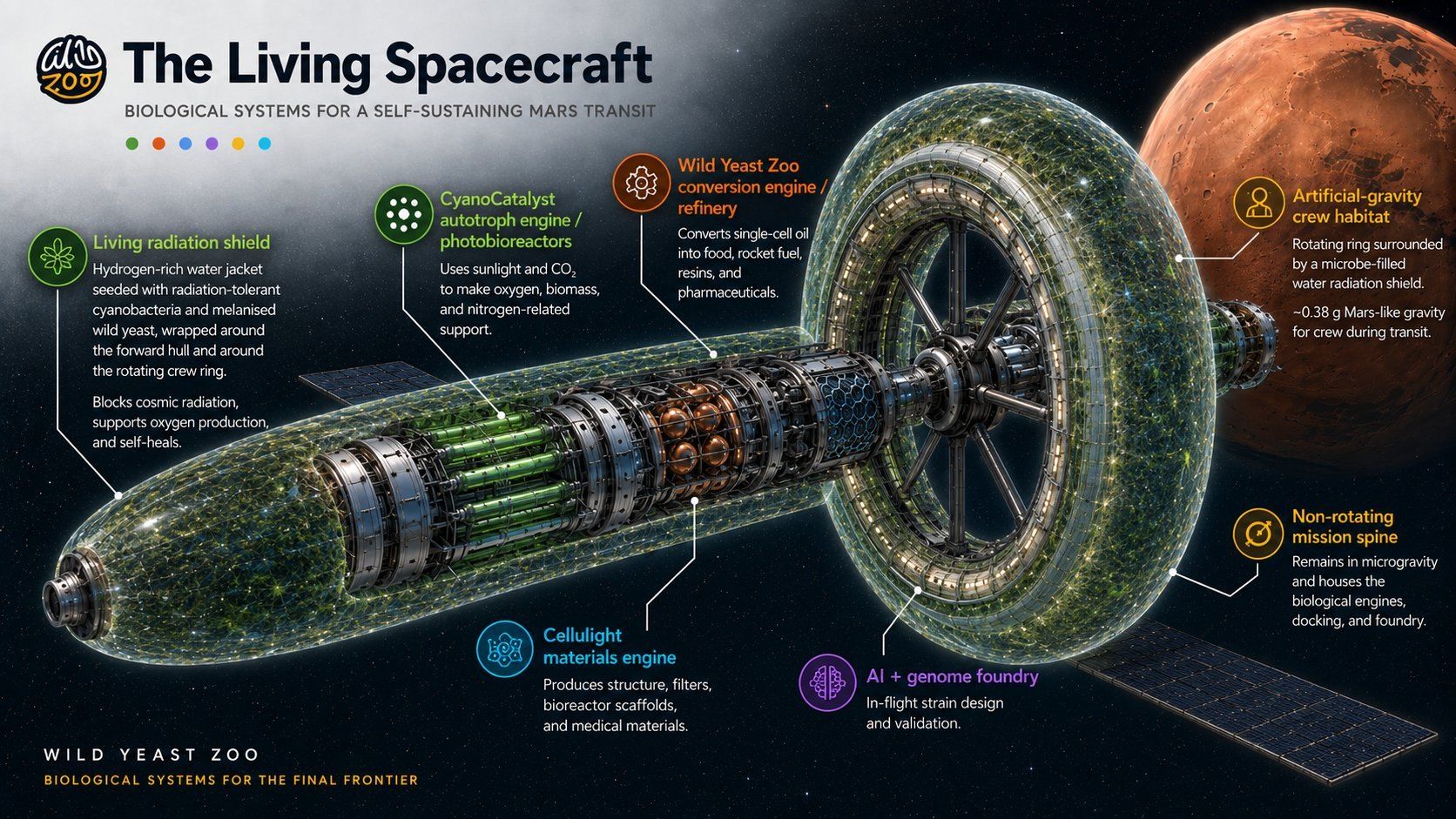
The Living Spacecraft
A speculative design project that imagines a spacecraft grown from living systems, and uses it to bring microbiology, space science, design, ethics, law and Indigenous knowledge into one conversation.
Speculative design that puts scientists, designers, lawyers and Indigenous knowledge holders around one problem.